
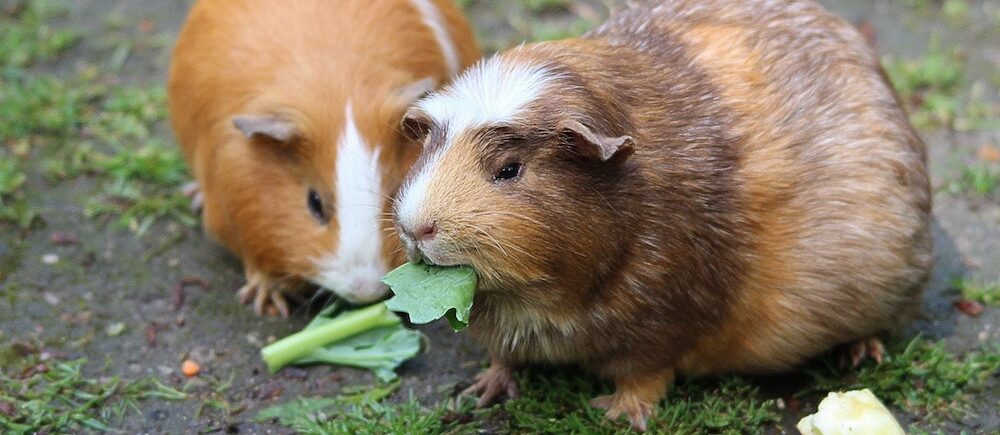
Guinea Pigs
Our How-To Guide for Guinea Pig Care
Guinea Pigs can live for 4-8 years.
Males reach sexual maturity at 9-10 weeks, and females at 6 weeks. Pregnancy lasts 59-72 days. They don’t build nests. Litter size can range from 1-6 and the young pups (not piglets) can be weaned at 3 weeks. They are born very advanced with hair, eyes open and able to ingest solids within 24 hours of birth.
Guinea Pigs need to have Vitamin C in their diet, as they can not manufacture their own, unlike most animals. Pelleted food is often vitamin C enriched but this deteriorates when stored and so a fresh supply should always be available. A balanced diet should include pellets, good quality hay, leafy green vegetables, small amounts of fruit, rolled oats and dry cereals. Additional sources of Vitamin C include parsley, beet greens, chicory, spinach, red and green capsicum, broccoli, tomatoes, kiwi fruit and oranges. Any changes to the diet must be done gradually.
Guinea Pigs are coprophagic, eating “Night Faeces” to provide a source of Vitamin B and optimise food utilisation. It is important that if their hutch is raised off ground level that it does not have a mesh floor, otherwise these night faeces will not be available to them.
Guinea Pigs produce large amounts of faeces and need to be cleaned out daily. Solid cages such as glass aquariums are not appropriate. Cages should be constructed of wood, plastic, metal or wire mesh with good ventilation, however must be weather proof and draught free. Housing with rabbits is not recommended as they may fight and spread diseases. A nest box is not essential but plenty of bedding should be provided. Bedding should be newspaper, shredded paper, wood shavings or hay. Care must be taken with wood shavings as some woods excrete oily resins which can be poisonous if eaten.
The cage needs to be kept in a quiet area out of direct sunlight. Guinea Pigs prefer temperatures around 18-26C and tolerate cold far better than they tolerate heat and humidity.
Guinea Pigs also require somewhere to run around and exercise each day. A run in the garden with rocks, plant pots, logs and toys to play amongst is ideal. It may need to be moved to prevent overgrazing in one area.
Ferrets are European animals and so are not bothered by cold weather, but succumb to heat stress very easily. When temperatures exceed 25 C, action must be taken to cool them down. This may include wet towels in & around their cage, frozen water bottles and bringing them indoors with air conditioning. If your ferret becomes weak with hot feet & diarrhoea, seek veterinary attention immediately.
Preventative Care and Diseases
There are no vaccinations required for Guinea Pigs. Regular worming of pigs housed in groups is advised. Most preventative care is based on good hygiene and diet, no overcrowding or stress.
Overgrown teeth is a genetically and diet related condition which causes excessive slobbering and wetting of chin and feet. This condition can be prevented by supplying unlimited hay, wooden toys and hard treats or mineral stones to nibble on.
Bacterial and viral diarrhoeas are common and faecally transmitted, so poor hygiene will encourage transmission of these diseases within a hutch.
Guinea pigs are very susceptible to infection with bacteria carried by rabbits, dogs and cats. Stress increases susceptibility. Transmission is aerosol and direct contact. Signs include loss of appetite, eye and nose discharges and difficulty breathing. This is a very serious disease which is often fatal.
Females more than 3 years old are prone to bladder stones and cystitis. Signs are blood in urine and hunched posture.
Skin diseases would be the most common condition of pet guinea pigs. They are very susceptible to ringworm and also to a number of skin mite infestations. Most skin problems are associated with stress, overcrowding, poor diet and poor cage hygiene. Signs include severe self trauma, thick scaling skin often beginning around the tail and hair loss. Treatment can be prolonged and includes thorough cleaning of the cage.
Dermatitis of the feet is commonly seen in fat animals kept on open mesh wire cage floors. The pads ulcerate allowing infection which extends and becomes very painful. Once it has developed this is a very difficult condition to treat and the outlook is poor. Hair loss can be the result of hierarchical barbering by the dominant Guinea Pig, hormonal disease, nutritional deficiencies or boredom. The hair is missing but the skin is not inflamed or itchy.
Scurvy (Vitamin C deficiency) signs include poor hair coat, leaking blood vessels, loose teeth, lameness, screaming (pain) and sometimes bone breakages.
To schedule an appointment for your guinea pig book online or call our friendly staff
